Castro Valley Epoxy Floors and ConcreteCastro Valley Epoxy Floors and Concrete

Basement Flooring in Castro Valley, CA - a floor matched to your tested slab

If your basement floor is lifting or the slab looks damp, we test the moisture first and put down a floor that suits your slab.

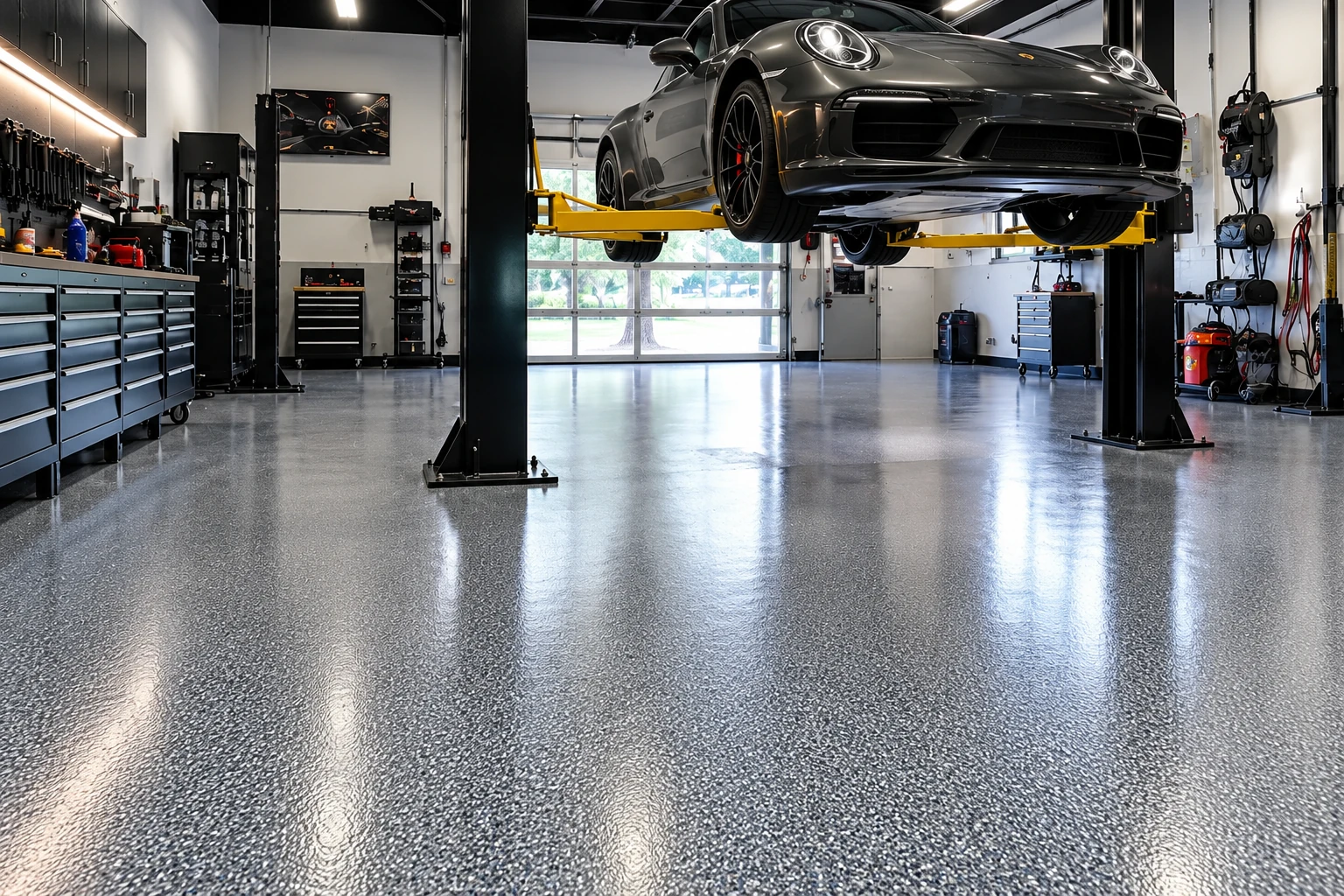
Glossy speckled floor in an auto workshop, with a sports car raised on a lift and tool cabinets along the walls.

Basement flooring in Castro Valley means preparing your concrete slab, testing how much moisture it gives off, and putting down a floor that suits those results, so the new floor stays bonded instead of lifting or blistering.

What goes into a new basement floor in Castro Valley?

Most people call because the basement floor is tired, damp-looking or coming up in spots, and they want to finish the space without the problem coming back. What you see on the surface is only part of it. The slab underneath decides what will hold, so I look there first, and I'll tell you plainly if it needs more work than you hoped.

The price moves with the size of the room, how much prep the slab needs, such as grinding off old coatings or filling cracks, whether the moisture test calls for a layer to hold vapor down, and the floor you choose. The schedule turns mostly on that test and on what its results ask of us before the floor goes down. Your written estimate spells out the price and the prep.

Why basement slabs need more care than other floors

A basement slab sits in the ground, and that changes what any floor on top of it has to put up with. These are the things I look at closely before anyone picks a finish.

Older slabs often lack a moisture barrier

Many older houses were built with no vapor barrier under the basement slab, and today's floors are more sensitive to moisture than the ones they replace. That's why I don't take an old floor's good record as proof. New floors have failed over slabs where the old floor did fine, so we test instead of guessing.

What trapped moisture does to a floor

Moisture caught under a floor can break down the adhesive, loosen the floor and raise blisters. It can also bring alkali up that attacks the finish, and it can let mold grow underneath. None of that shows on the first day, which is why the test comes before the choice of floor.

Old coatings and cracks come up first

Paint, old glue, worn sealers and cracks all have to be dealt with before a new floor goes down, because a floor holds only as well as the surface under it. If your slab needs more prep than you expected, I'll tell you at the estimate rather than cover it and hope.

What happens when you call us about a basement floor?

Here is how a basement floor goes with us, from your first call to the final walk-through, so you know who you'll be dealing with and what you'll have in hand.

  1. 1

    Call or send the form

    Please call (510) 931-7868 or send the form with a few words about your basement. We'll get back to you and set up a visit at a time that works for you.

  2. 2

    Meet me at the slab

    I come out, look over the slab for cracks, moisture and old coatings, and ask how you'll use the space. Then we test the slab, and your written estimate lays out the price, the prep and a floor that suits the results.

  3. 3

    Prep and lay the floor

    Once you're ready, our crew grinds and preps the slab, handles any cracks or moisture work the estimate called for, and puts down the floor we agreed on, cleaning up as we go.

  4. 4

    Walk the finished floor

    Before we leave, we walk the finished floor with you so you can look over every part of it and ask anything you like. I'll also go over how to clean it and what it needs to stay in good shape.

Request an estimate

How we approach basement flooring, slab first

In a basement, the moisture in the slab decides which floor will hold up. So I test the slab before we talk about colors or finishes, and then I help you choose a floor that fits the results, not the other way around. Picking the floor first and hoping the slab cooperates is how basements end up with floors that lift or blister.

Every floor we lay starts with concrete grinding and surface preparation, because a coating grips clean, open concrete and lets go of anything smooth, dusty or painted. We grind off old paint, glue and sealers, open the top of the slab so it can take a bond, and fill cracks so they don't show through the new floor.

If the test shows the slab giving off more moisture than your floor allows, that doesn't have to end the project. One option is a liquid vapor retarder, a coating rolled onto the slab to hold moisture back, and it has to handle that moisture and suit the floor that goes over it. If you'd rather keep the bare concrete, concrete sealing protects it and keeps it easy to clean.

Coat the slab

An epoxy or polyaspartic coating goes over the ground slab and gives you a continuous, joint-free floor that wipes clean. It suits a slab that tests within the coating maker's moisture limits, or one that gets a vapor-holding layer first.

Keep the concrete as the floor

We grind the slab and seal or polish it, so the concrete itself becomes your finished floor, with a thin build-up and simple upkeep. It still needs a proper sealer, and the test results guide which one we use.

Get your basement slab looked at and priced in writing

We reply to every call and form within one business day to set up a visit. I'll come out for a free, in-person estimate with no pressure and no obligation. You'll get the price and the prep in writing, so you can decide in your own time.

(510) 931-7868

sales@castrovalleyepoxyflooringandconcretepolishing.com

Basement floors, permits and licensing in Castro Valley

Castro Valley is unincorporated, so building permits here come from Alameda County rather than a city office, and you apply through the county's online permit portal. If your basement project needs a permit, I'll say so at the estimate and take care of filing it with the county, or walk you through it if you'd rather file it yourself.

In California, flooring work falls under its own license class with the state licensing board, covering every kind of floor except ceramic tile. Small jobs count too. Work under $1,000 still needs a licensed contractor whenever it needs any permit or the person doing it brings on helpers, so a low bid from someone unlicensed isn't the shortcut it looks like.

We're based in Castro Valley and do the same basement work in Hayward, San Leandro, Oakland, Dublin, Pleasanton and many other cities around it. The basement calls we get tend to sound alike. There's an older slab, an old floor coming up, damp patches near the walls, and a homeowner who wants to finish the space without repeating the problem.
Why Castro Valley homeowners call Castro Valley Epoxy Floors and Concrete for basement floors

I do every estimate myself, and I stay on the job with our crew from the first pass of prep to the final walk-through, so the person who looked at your slab is the one watching your floor go down. We've been in business since 2017, 9 years now, and I learned this trade on real floors, starting with my own garage.

We are licensed and insured. We also treat your house as someone else's property, because it is, so we protect the rooms we pass through and leave your basement clean. Satisfaction guaranteed on every job.

If you'd like me to look at your basement slab, please call (510) 931-7868 or send us the form, and we'll set up a time.

Concrete Sealing

When you'd like to keep the bare concrete in your basement, a good sealer helps it stand up to spills and dust and keeps it easy to clean.

Cities where we put in basement floors

We're based in Castro Valley and work in the cities listed here, along with many others nearby. The slab work is the same wherever you live, so if you don't see your city, please call and ask.

Basement flooring questions from Castro Valley homeowners

What is the best flooring for a basement in Castro Valley?

The best basement floor is the one your slab's moisture test supports. One San Francisco flooring guide rates vinyl plank, often called LVP, better for basements because it resists water. A cost guide calls polished concrete very durable and low maintenance with a long life, as long as it's properly sealed, so sealing belongs in both its price and its upkeep.

How do you test a basement slab for moisture before new flooring?

A slab moisture test measures the relative humidity in the concrete, how fast moisture vapor leaves the slab, and the pH at the surface. Those readings are checked against the flooring maker's requirements, so the floor you choose sets what counts as dry enough. That's why I'd rather test first and choose the floor second.

How much does basement flooring cost in Castro Valley?

Installed flooring in San Francisco usually costs about $3 to $15 per square foot, and that range is for flooring in general, not a quote from us. A basement's price turns on its size, the prep the slab needs and what the moisture test asks for. Your written estimate puts your own figure on paper.

How should I get my basement ready for a moisture test?

Clear the floor where you can and keep the room at its normal temperature and humidity, with the heat or air running as it usually does. One industry test standard calls for the slab and room to sit in that normal state for at least 48 hours before humidity readings, so we set the test date after the room has settled.

Who issues building permits in Castro Valley?

The Alameda County Building Inspection Department issues building permits in Castro Valley and the county's other unincorporated areas, through its online portal. The portal takes plan review and permit fees and tracks your approval status. For help using it, you can call 510-670-5440 or email permitbid@acpwa.org.

Call about your basement floor today

When you call (510) 931-7868 or send the form, please have the basement's rough square footage handy and mention any water seeping through the walls or floor, or droplets forming on them, because those are the most common signs of basement moisture and they tell me what to test.

(510) 931-7868Request an estimate