Epoxy Floor Coatings
For a garage or basement slab that's stained, dusty or hard to clean, we grind it, fill the cracks and roll on an epoxy coat that wipes clean.
Castro Valley Epoxy Floors and Concrete is a flooring contractor serving Union City, CA. We grind, repair and coat garage, basement and shop floors, and we polish, stain, seal and resurface concrete for homes and businesses here.
Castro Valley Epoxy Floors and Concrete grinds, repairs, coats and polishes concrete floors in Union City, CA. Homeowners here call us about garages, basements and pool decks, and shop and business owners call about floors that have to work hard, from service bays to back rooms that get mopped every night.
We're a flooring contractor based in Castro Valley, and the garage slabs we meet in Union City look a lot like the ones closer to home, with oil spots and tire marks, or a coat of paint or sealer that's started to peel. Before anything new goes down, we take the old layer off and grind the surface open so the coating has something to grab.
Basements and shop floors bring their own questions. A basement slab can carry moisture up from below, so I check it before choosing a coating, and a working floor needs a system built for the carts, chemicals or hot water it sees every day. The estimate is where we sort out which system suits the room and how much prep the slab needs first.
For a garage or basement slab that's stained, dusty or hard to clean, we grind it, fill the cracks and roll on an epoxy coat that wipes clean.
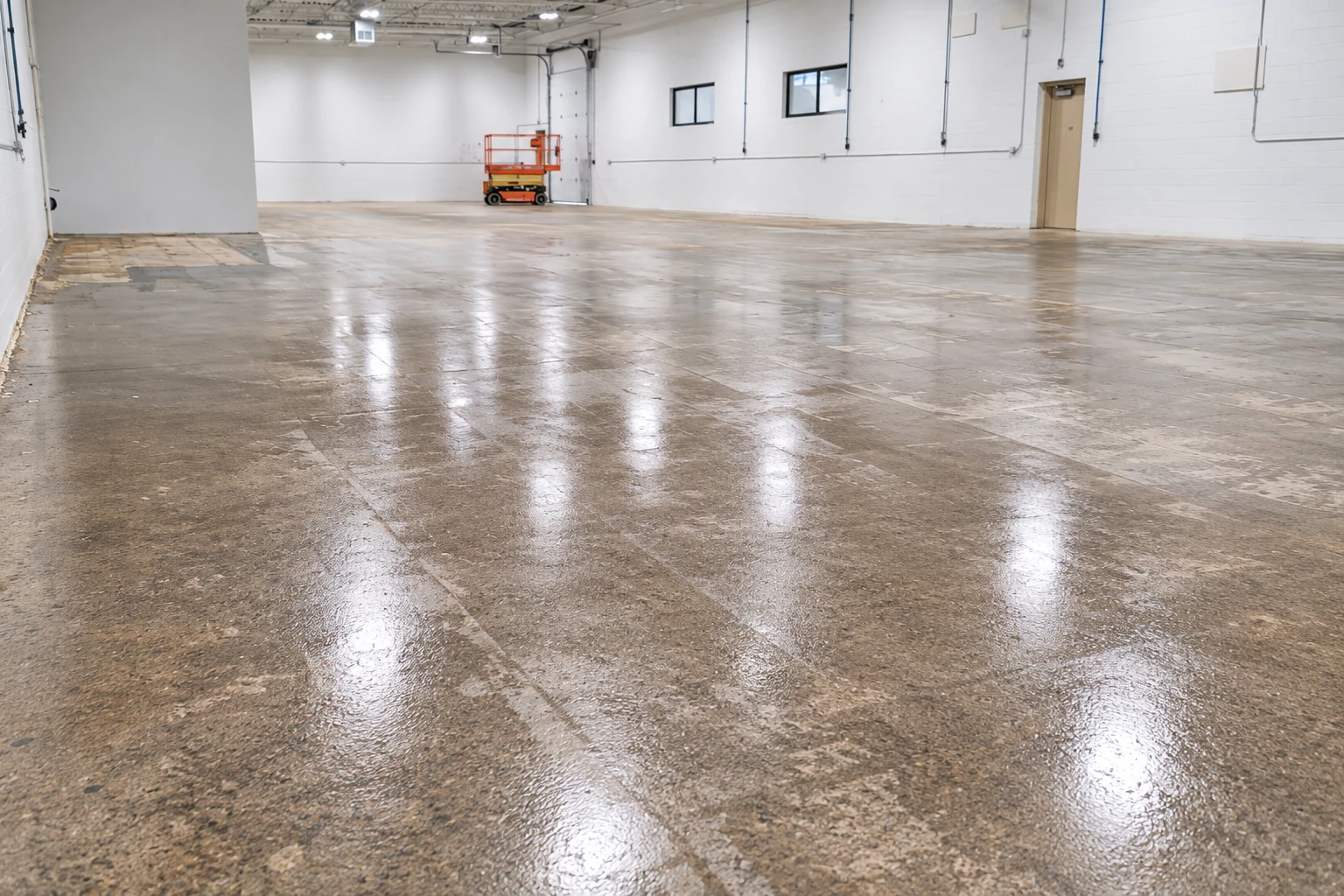
When a shop, warehouse or service bay floor takes carts, chemicals and steady traffic, we build a thicker epoxy system over a slab ground and repaired for it.
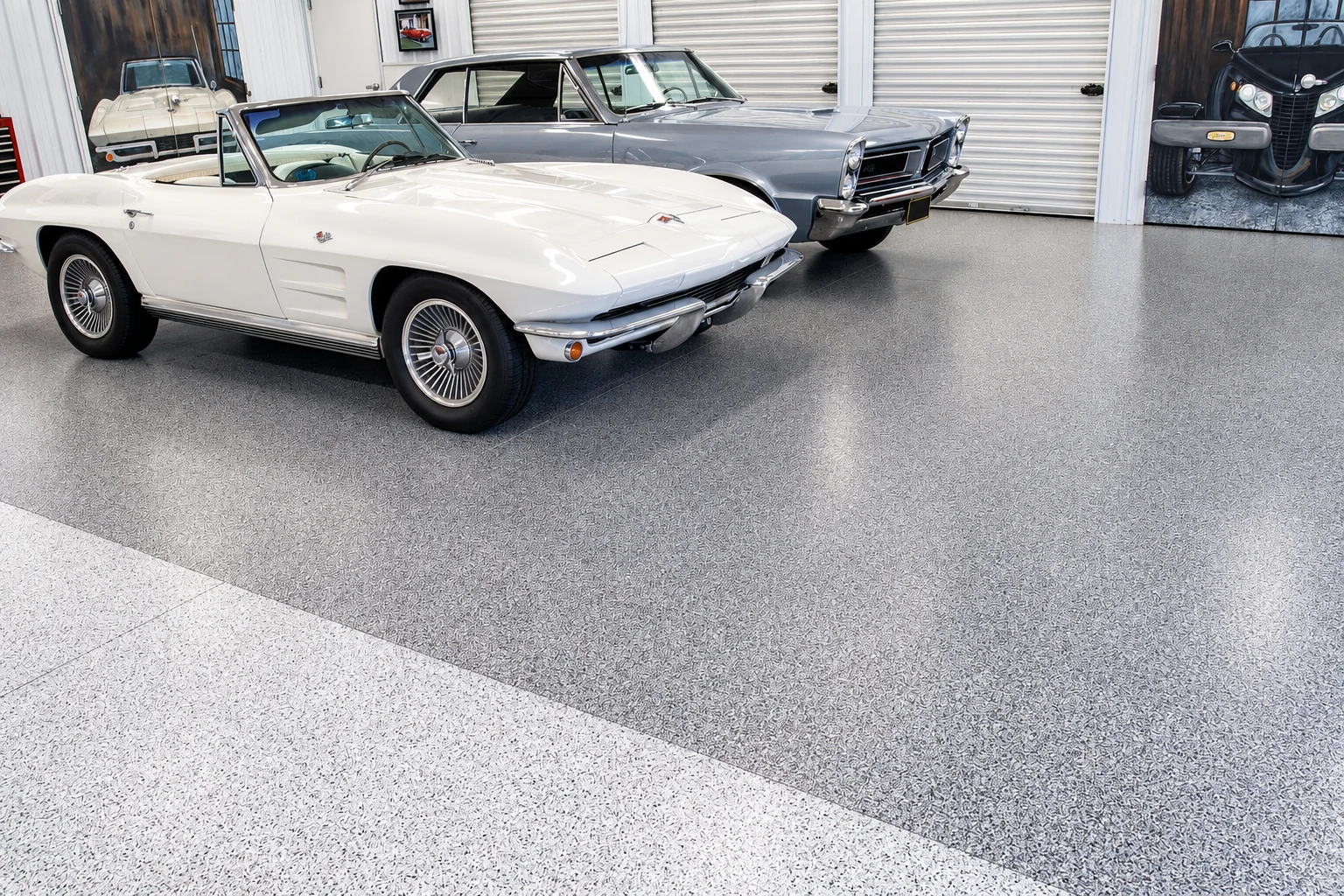
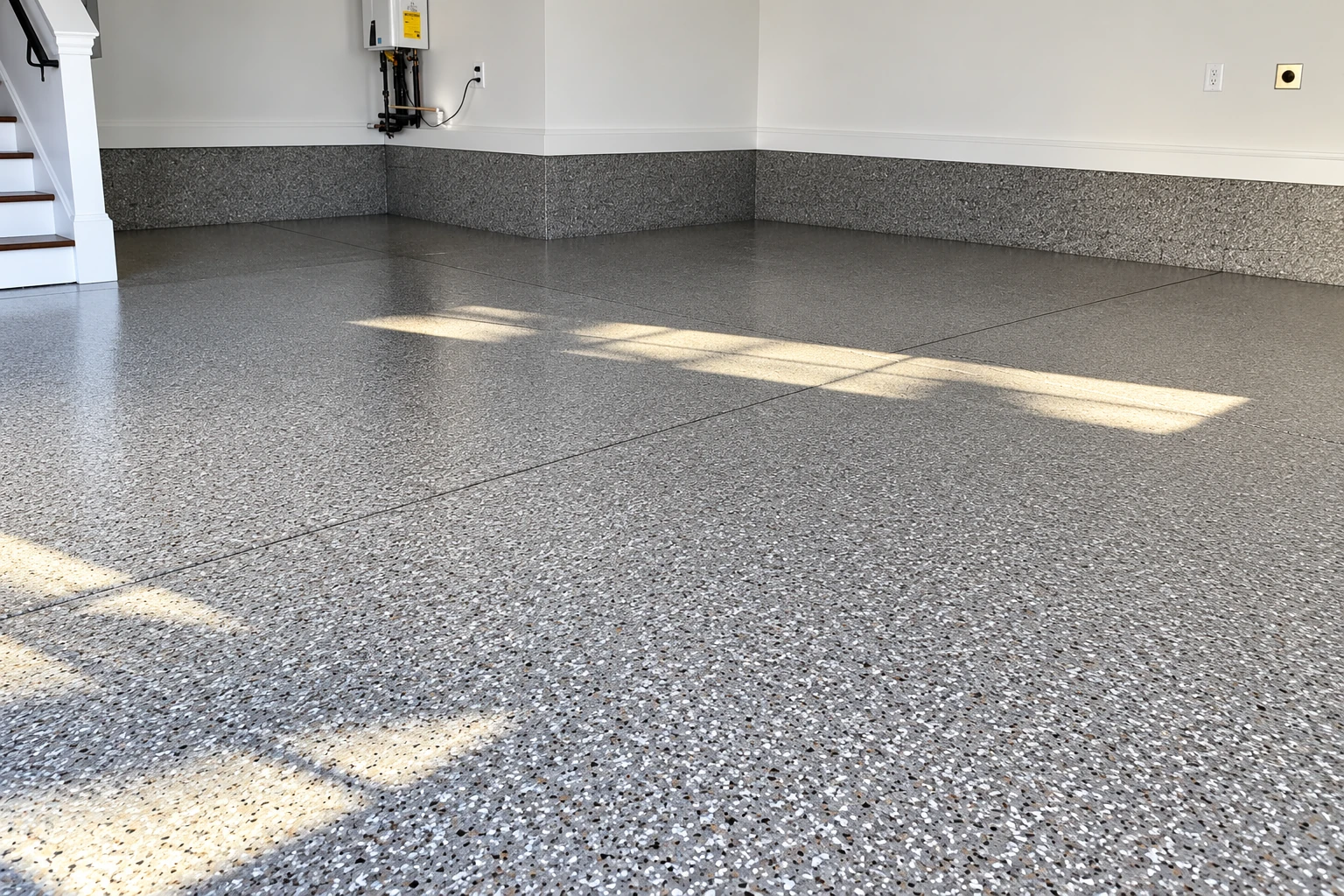
When oil spots, tire marks and peeling paint have taken over your garage floor, we strip it, grind it and lay a flake coating that hides everyday wear.
A good fit when you'd like your garage back sooner, because polyaspartic usually cures faster than epoxy and holds its color in sunlight from an open door.
For a basement, showroom or bar area where the floor is part of the look, metallic epoxy swirls pigment through the coat, over a slab prepped like any other.
For kitchens, food spaces and wash-down floors that see hot water and harsh cleaners, urethane cement handles heat and moisture better than a standard epoxy coat.
If your slab is sound and you'd rather have no coating to wear off, we grind and polish the concrete itself to a hard sheen that's easy to sweep.
For a patio, basement or shop floor that mostly needs color, we clean the slab, stain it and seal it so the color holds up under foot traffic.
For a lobby, entry or showpiece room where you want chips of stone or glass set in a binder and ground smooth into a floor built for heavy foot traffic.
When a basement slab feels damp, cold or dusty, we check the moisture first, then choose a coating or polish that suits what the slab is actually doing.
Before any coating, or when an old floor needs a fresh start, we grind off the weak top layer and old glue so the next layer can bond to sound concrete.
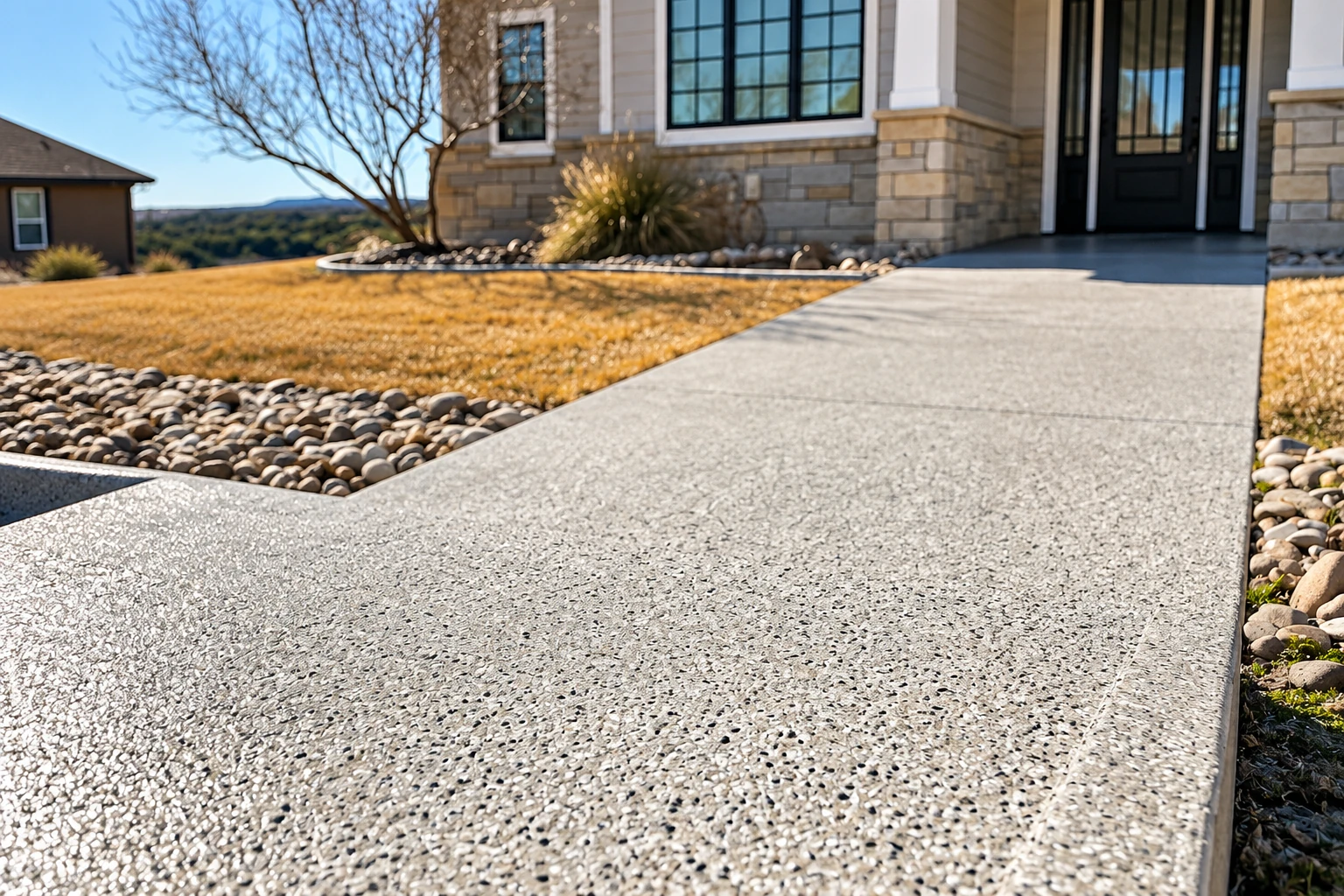
For a driveway, patio or garage slab you want to keep as bare concrete, a sealer helps it shed oil, water and stains instead of soaking them up.
When a slab is worn, pitted or flaking but still solid underneath, a bonded overlay gives you a new surface without tearing out the concrete.
If a slab dips, slopes or has humps that a coating would only show off, a self-leveling layer gives us a flat base for whatever goes on top.
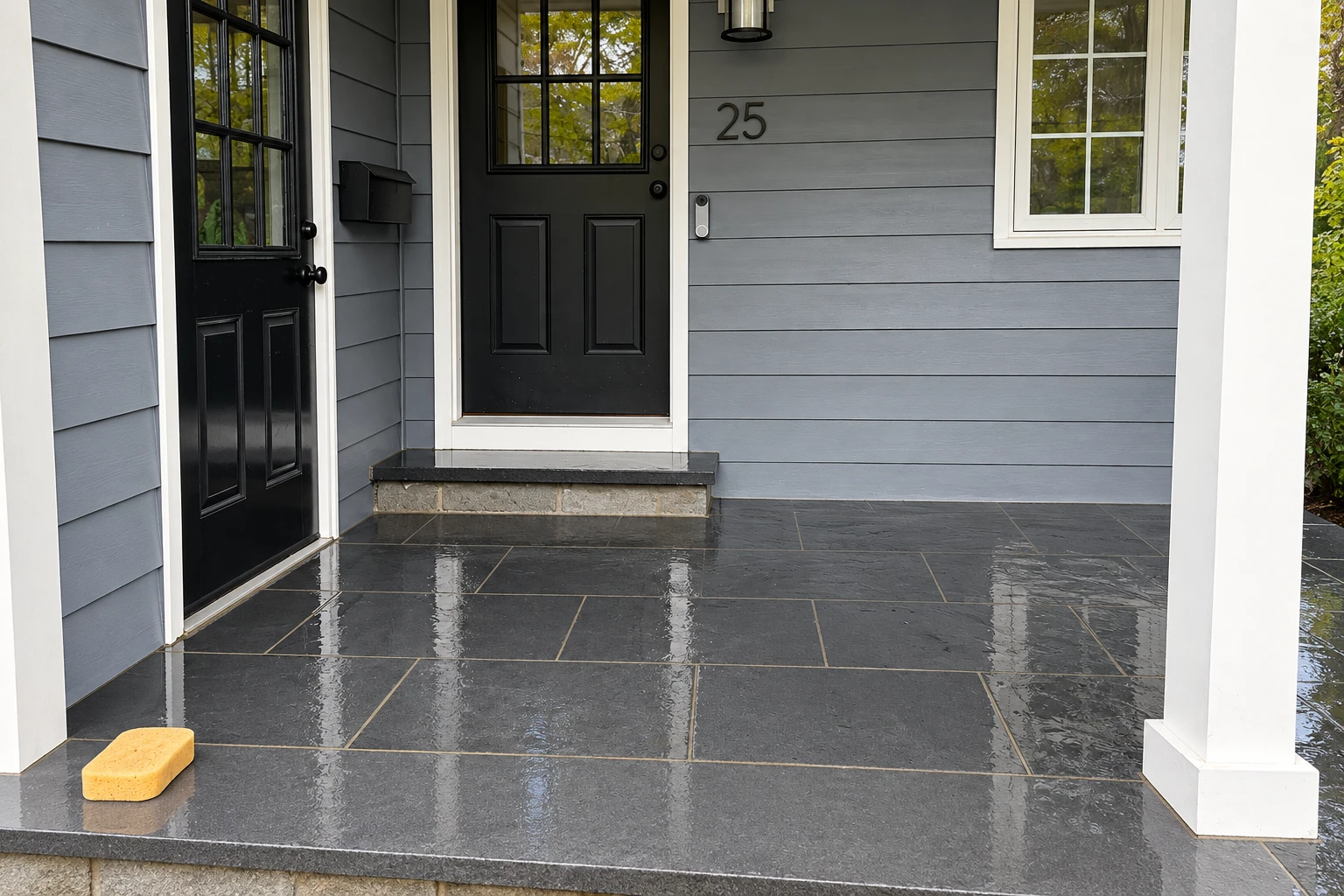
For a pool deck that's cracked, faded or rough on bare feet, we repair the concrete and lay a textured coating that keeps its grip when wet.
When old epoxy, paint, tile adhesive or a failing sealer is still on the slab, we take it off first, because a new coat won't hold over one that's letting go.
We reply to every call and form within one business day, and the estimate is free, with no pressure and no obligation. After you send this, I'll set a time to come out to your Union City address myself, look at the slab in person and put the price and the prep in writing for you.
(510) 931-7868In Union City, permits come through the city's Building Division, whose counter handles over-the-counter permits as well as plan submittals and resubmittals. A permit handed across the counter usually doesn't hold up a start date, while one that needs plans reviewed, or sent back for changes, can push it out. The counter is open Monday through Thursday, 9 a.m. to 5 p.m., and every other Friday from 9 a.m. to noon.
Whether your floor project needs a permit is the Building Division's call, so that's the office to ask. If yours needs one, I'll say so at the estimate and file it for you, or walk you through it if you'd rather file it yourself. Before you hire anyone, you can check two things, a state contractor license and a Union City business license. We're licensed and insured.
What moves the price here is what moves it in Hayward or San Leandro, namely the size of the floor, how much grinding, crack repair and stripping the slab needs, and the coating system you choose. The schedule turns on that same prep, on any permit, and on how long the coating has to cure before you walk or drive on it. I put the price and the prep in writing at the estimate.
I got into this trade by grinding and coating my own garage floor and reading every product sheet I could find, and we've been doing this work for other people since 2017. Prep is the part nobody sees, and it's the part that decides whether a floor holds, so I'd rather tell you your slab needs more work than coat it and hope for the best.
I do the estimate myself, and I stay on the job with our crew from the first pass of prep to the final walk-through, so the person who described the prep to you is the one checking it. We treat your garage, basement or shop as someone else's property, because it is, and we leave it clean when we're done.
The promise we make is satisfaction guaranteed on every job. If you'd like to talk through your floor before anything else, please call (510) 931-7868 or use our estimate request form, and I'll go over what your slab needs. Thank you for considering us for the work.
The Building Division publishes general design information for Union City. Here's what the parts that touch a concrete floor mean for your job, and what they can't tell us about your own slab.
The Building Division's design information lists Soils Hazard Zones east of Mission Boulevard and west of Union City Boulevard. The city says those are general areas that don't describe any single property, so I won't guess about your lot from a map. What I do is look closely at your slab at the estimate, at the cracks, the edges and any spots that sound hollow, and we repair those before we coat.
The Building Division lists the standards it follows, led by both volumes of the California Building Code and followed by the state's residential, electrical, mechanical, plumbing, energy, fire and green building codes. When a floor project does go through the city, that list is what its review works from, so we plan the job to it from the start rather than adjust things after the fact.
The Building Division lists Union City as Climate Zone 3, which is a value designers use, not a weather reading for any given day. A coating cares about the actual slab and the actual air in your garage when it goes down, so on the day we check the slab's moisture and the room's conditions ourselves before we mix anything.
Many of the floors we're asked to look at here are attached garage slabs and the working floors of shops and small businesses. They often carry years of oil, an old sealer or a paint job that's started to lift, and all of that has to come off before anything new can bond, so stripping and grinding are usually the first lines on the estimate.
Under the California Contractors State License Board, a contractor needs a state license when the project requires a building permit, uses any additional workers, or the labor and materials on one or more contracts total $1,000 or more. A job may be exempt only when no permit is needed, no employees work on it and the total stays under $1,000, so please ask any contractor for theirs before you sign.
Yes. The city says its municipal code calls for a business license for every business, trade and profession operating in Union City, and its list names contractors and out-of-town businesses working inside city limits. That covers crews like ours that drive in from Castro Valley, so it's a fair question to ask any contractor before work starts.
The price is set at the estimate, after I've seen your slab, because the prep it needs varies far more than the coating does. A single-color epoxy usually costs less than a full flake system with a clear topcoat. Heavy oil, old paint and wide cracks add grinding and repair, while a clean, sound slab keeps the price down.
Please move cars, shelves, bikes and everything stored along the walls out of the garage, because we grind and coat right up to the edges. Let me know about anything that leaks or drips onto the floor, and show us where the nearest outlet is. We handle the grinding, crack repair and cleanup from there.
That depends mostly on the prep your slab needs and the coating you choose, and I'll tell you at the estimate rather than guess here. Crack repair and stripping an old coat add time before coating starts, and polyaspartic usually lets you back on the floor sooner than epoxy, which needs longer to cure before it can take a car.
Usually yes, but we repair the cracks first instead of coating over them, because a crack that's still moving can show back through a new coating. At the estimate I look at each crack, and if the slab needs more work than a coating can cover, I'll tell you so and put that repair in writing.
Our hours run from 8 AM to 9 PM on weekdays and from 6 AM to 9 PM on weekends, so you can call (510) 931-7868 after work or early on a Saturday, or send the form whenever it suits you.