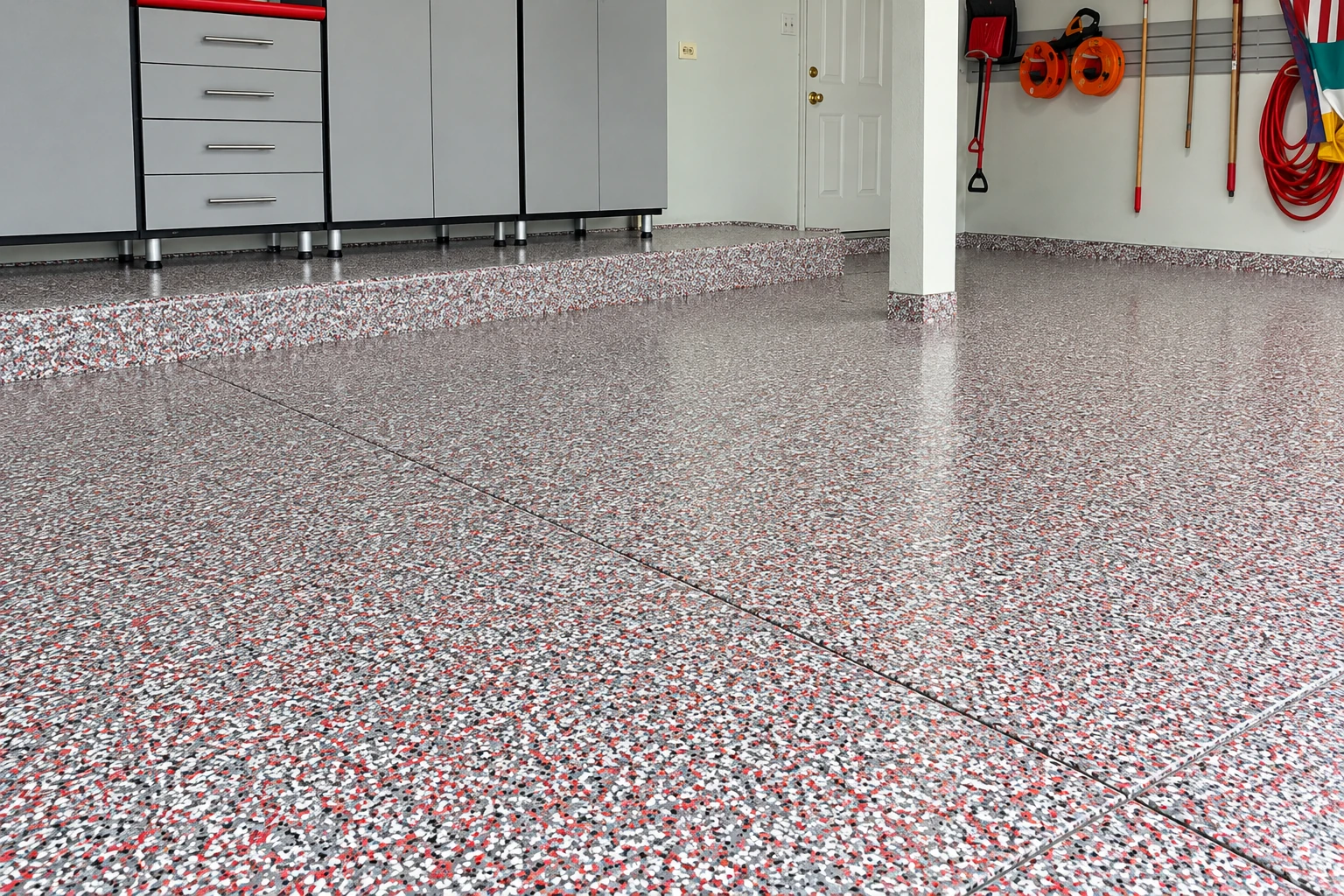
Epoxy Floor Coatings
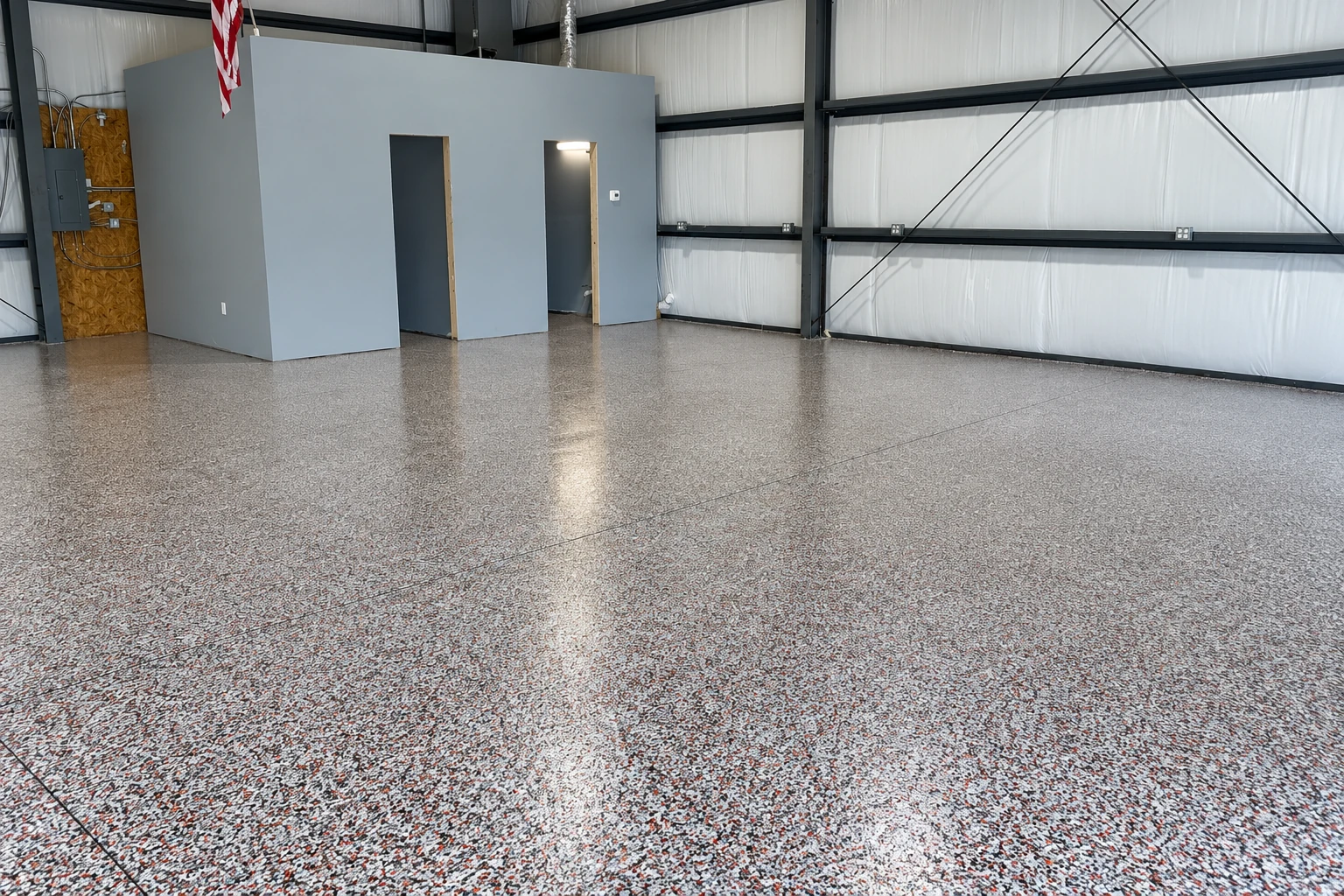
This helps when a garage or workroom slab is dusty, stained or hard to clean, because a ground and coated surface seals the concrete and wipes down easily.
Castro Valley Epoxy Floors and Concrete is a flooring contractor serving Hayward, CA. We grind, repair and coat garage, basement and shop floors, and we polish, seal or resurface concrete for homes and businesses.
Castro Valley Epoxy Floors and Concrete handles concrete floor work across Hayward. We coat garage and basement slabs with epoxy or polyaspartic, and we polish, stain, seal and resurface concrete in homes, shops and business spaces. Every job starts with grinding and repair, because the slab under a floor decides whether the floor holds.
Many of our Hayward calls come from homeowners with a garage floor that's stained, dusty or peeling from an old store-bought kit. Others have a basement they'd like to use as a real room. Shop and business owners call about floors that take carts, spills and steady foot traffic. The work is much the same either way, and most of it is prep.
We come over from Castro Valley, so Hayward is close work for us, and we do the same jobs next door in San Leandro. On every slab I look for cracks, old coatings, oil soaked into the concrete and signs of moisture, because those decide what the floor needs before anything goes on top.
This helps when a garage or workroom slab is dusty, stained or hard to clean, because a ground and coated surface seals the concrete and wipes down easily.
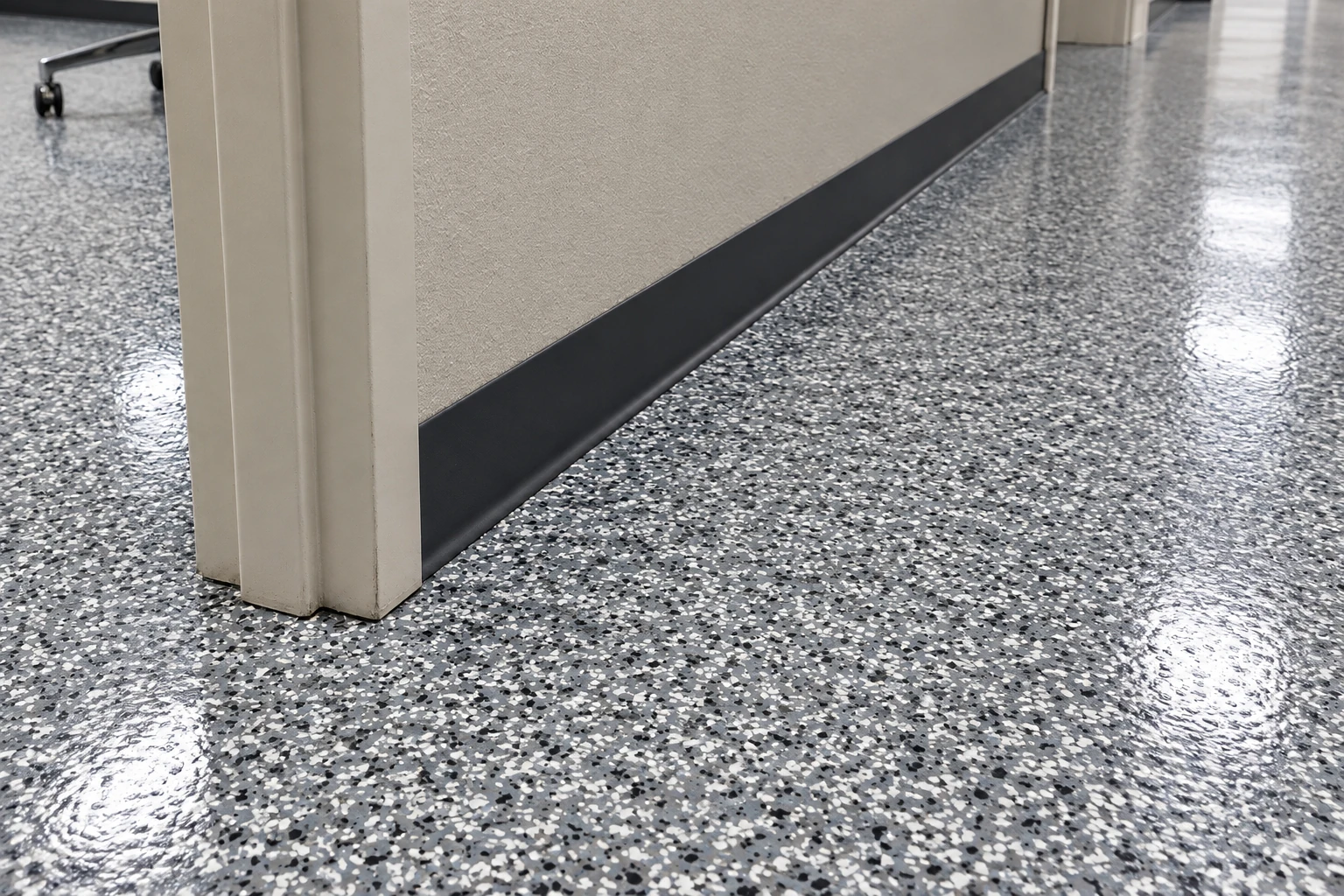
For Hayward shops, service bays and work areas where carts, forklifts and spills wear a floor down, we build heavier systems suited to the traffic the space carries.
Many house garages double as a workshop, gym or storage room. A coated floor keeps tire marks and oil from soaking in and makes the space easier to keep clean.
If you'd rather not lose the garage for long, a polyaspartic topcoat usually cures faster than standard epoxy. It also holds its color well near an open door.
This suits a basement, showroom or bar area where looks matter as much as wear. Metallic pigments give a swirled, glossy finish over the same careful prep.
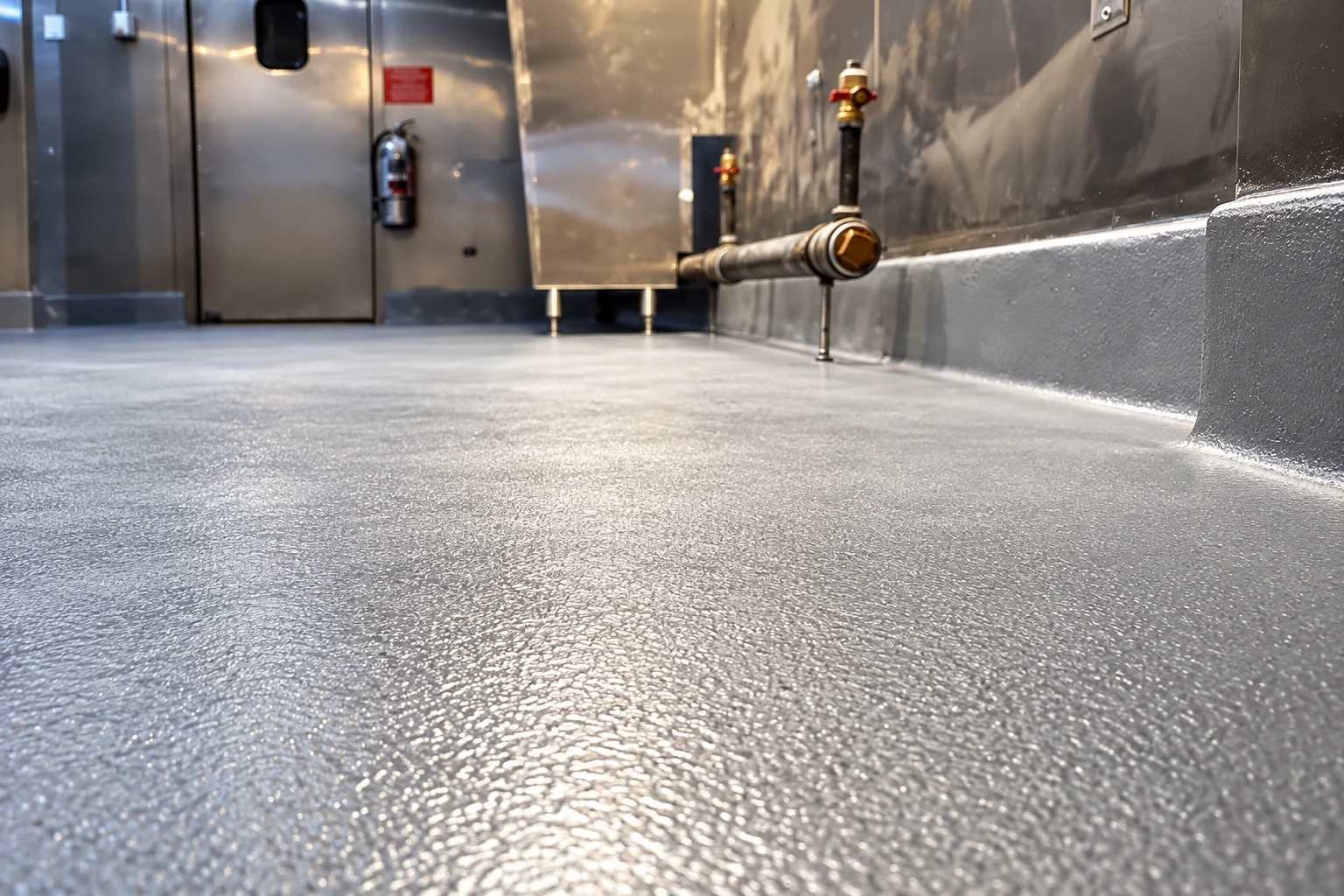
This is a good fit for commercial kitchens and food prep rooms, where hot water, steam and cleaning chemicals would wear an ordinary coating down over time.
When the slab itself is sound, we grind and polish it into a hard, shiny floor with no coating on top to peel. It works well in shops and open living spaces.
Stain adds color to an interior slab or patio without covering the concrete, so the natural marks and variation still show through under a clear sealer.
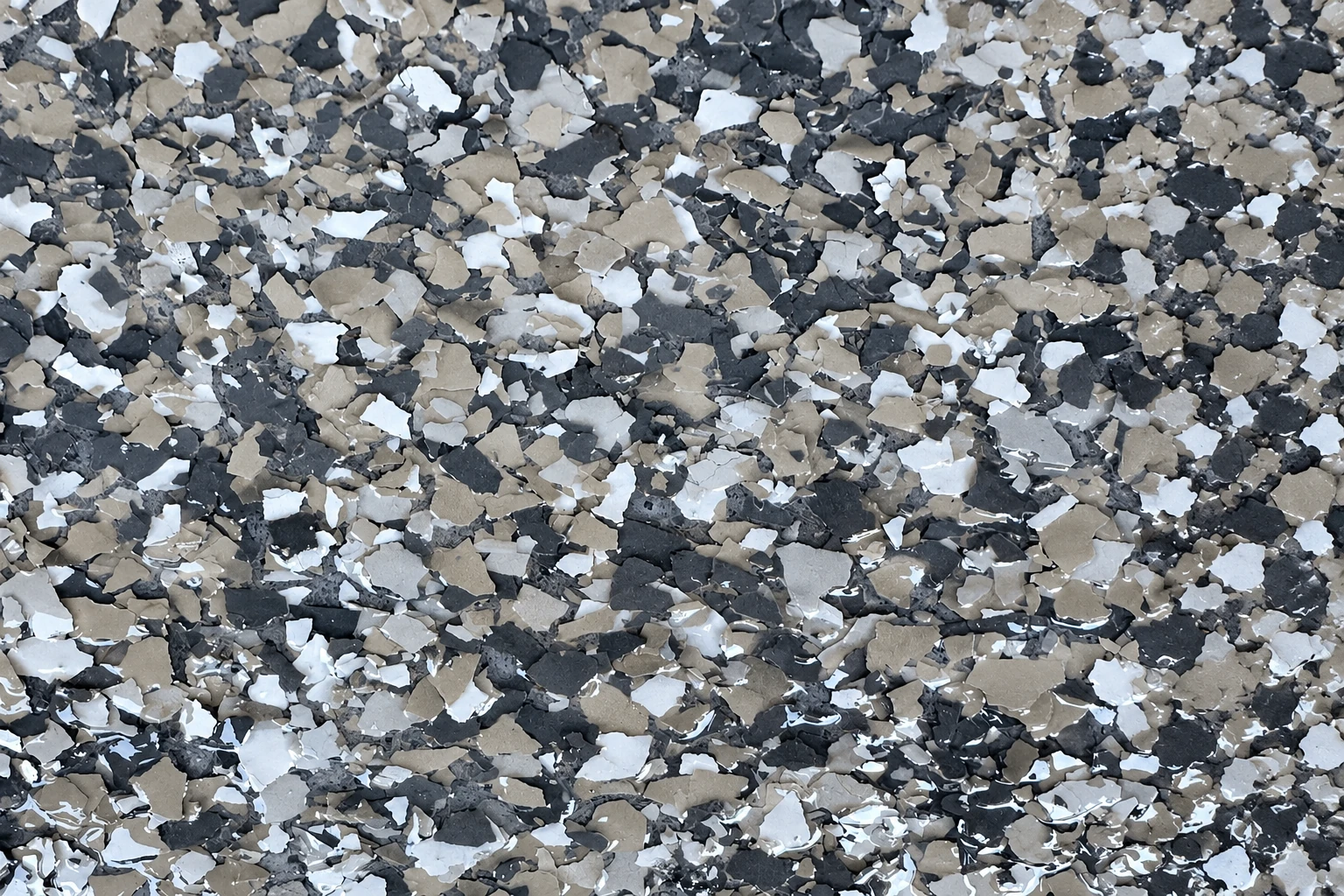
For lobbies, entries and other spaces that want a long-lasting decorative floor, terrazzo sets chips of stone or glass into a binder that's then ground smooth.
If you want to use your basement as a room, we test the slab first. Then we pick a floor system that suits what we find, not what looks best in a brochure.
Every coating we install starts here. Grinding opens the concrete and removes the weak, dirty top layer, so the new floor has something sound to grip.
Driveways, patios and bare garage slabs soak up oil and water. A good sealer slows that staining and makes everyday cleanup a lot easier.
When a slab is worn, pitted or flaking but still structurally sound, an overlay gives it a new surface without the mess of tearing it out.
This helps when an interior slab is uneven before new flooring goes down. A poured underlayment fills the low spots and gives you a flat base to build on.
If your pool deck is cracked, faded or slick, we repair the concrete first. Then we apply a coating or overlay that gives better footing around the water.
When an old coating, sealer, glue or tile is still stuck to the slab, we strip it down to bare concrete before anything new goes over it.
We reply to every call and form within one business day, and there's no obligation. I'll set a time to come out to your Hayward property and look at the slab in person, and you'll have a written estimate to think over at your own pace.
(510) 931-7868In Hayward, building permits come through the city's Permit Center, and the city decides whether a given floor job needs one. If yours does, the permit has to be in hand before we start, and any inspection becomes part of the schedule. The city's online permitting system lets you submit an application, add your contractor, pay fees and schedule inspections from home.
There are two licenses worth asking about for anyone you hire. The California Contractors State License Board licenses contractors who build or alter structures. The City of Hayward requires a business license from every business that works inside the city, and that includes one based outside city limits, like ours in Castro Valley. Please ask any contractor you're considering about both.
If your project needs a permit, I'll say so at the estimate. We'll file it with the city or county office for your address, or walk you through filing it yourself. The price depends mostly on your slab's condition and the system you choose, and the schedule depends on prep, repairs and any permit. The estimate puts the price and the prep in writing. We work the same way in Castro Valley and Union City.
I've run this business since 2017, and I do every estimate myself. I also stay on the job with our crew from the first pass of prep to the final walk-through, so the person who looked at your slab and wrote down the prep is the one who makes sure it gets done. If your slab needs more work than you hoped, I'll tell you plainly before we start.
We treat your garage, basement or shop as someone else's property, because it is. That means protecting what we aren't working on and leaving the space swept and clean when we go. We're licensed and insured, and we offer satisfaction guaranteed on every job. To get started, please call (510) 931-7868 or send us the form above.
These are the things I check on Hayward floors before giving a price, because each one changes the prep, and the prep decides whether the coating holds.
The city's Building Division points to Hayward's closeness to the Hayward fault. It also cites studies that suggest the potential for a major earthquake within the next 20 years. For a floor, that means cracks matter. A coating laid over a moving crack usually splits along it, so we open, fill and grind cracks first. We also leave open the saw-cut control joints that let a slab move.
The city's mapping tool gives a report for a single lot, with Alameda County Assessor, jurisdiction and hazard information. It's a quick way to confirm which jurisdiction your address falls under, and that tells you which permit office to deal with if your job needs one. I check the same thing at the estimate, so any paperwork goes to the right office.
A slab poured on the ground can carry water vapor up from underneath. A coating sealed over damp concrete can blister or lift in patches, and we see this most often in garages and basements. We test the slab before we choose a system. If the reading comes back high, we'll talk through a moisture-tolerant primer or another option before anything goes down.
The strip of slab just inside a garage door takes the most water, tire grit and wear, and it's often where an old coating fails first. We pay close attention to how the new floor ends there. We grind a clean edge so the coating has something to lock into, which makes it less likely to start peeling where you drive over it every day.
Structural work and demolition, such as cutting out and repouring a slab, need a permit. The city's guidance says building permits are required for almost all construction work, including those two. For a coating or polish on a sound slab, you can call the Permit Center at 510-583-4140, and I'll also tell you what I think at the estimate.
Under the state licensing board's rule, a contractor needs a license when a job requires a building permit, uses any additional workers, or totals $1,000 or more in labor and materials on one or more contracts. That $1,000 counts labor and materials together. Please ask any contractor you're considering about their license before you sign anything.
The price comes from your slab, so we give it after we've seen the floor rather than over the phone. The size, any cracks and patching, an old coating or sealer we have to strip, moisture, and the system you choose all move the number. You'll have your own figure for your garage floor coating after the visit.
Please clear the floor completely, including shelves, bins and anything stored along the walls, and park the cars outside, because we grind right to the edges. We take care of the cleaning, crack repair and grinding ourselves. If something is too heavy to move, tell us at the estimate and we'll plan around it.
The coating maker's cure instructions set that wait, and it differs by product, so I'll tell you the wait for your system before we start. Polyaspartic usually returns to service sooner than standard epoxy. The number of days on site depends mostly on how much prep and crack repair the slab needs, and I can only judge that in person.
Our phone hours run into the evening every day of the week, so you can call (510) 931-7868 after work or on a weekend, or use the contact form whenever it suits you.