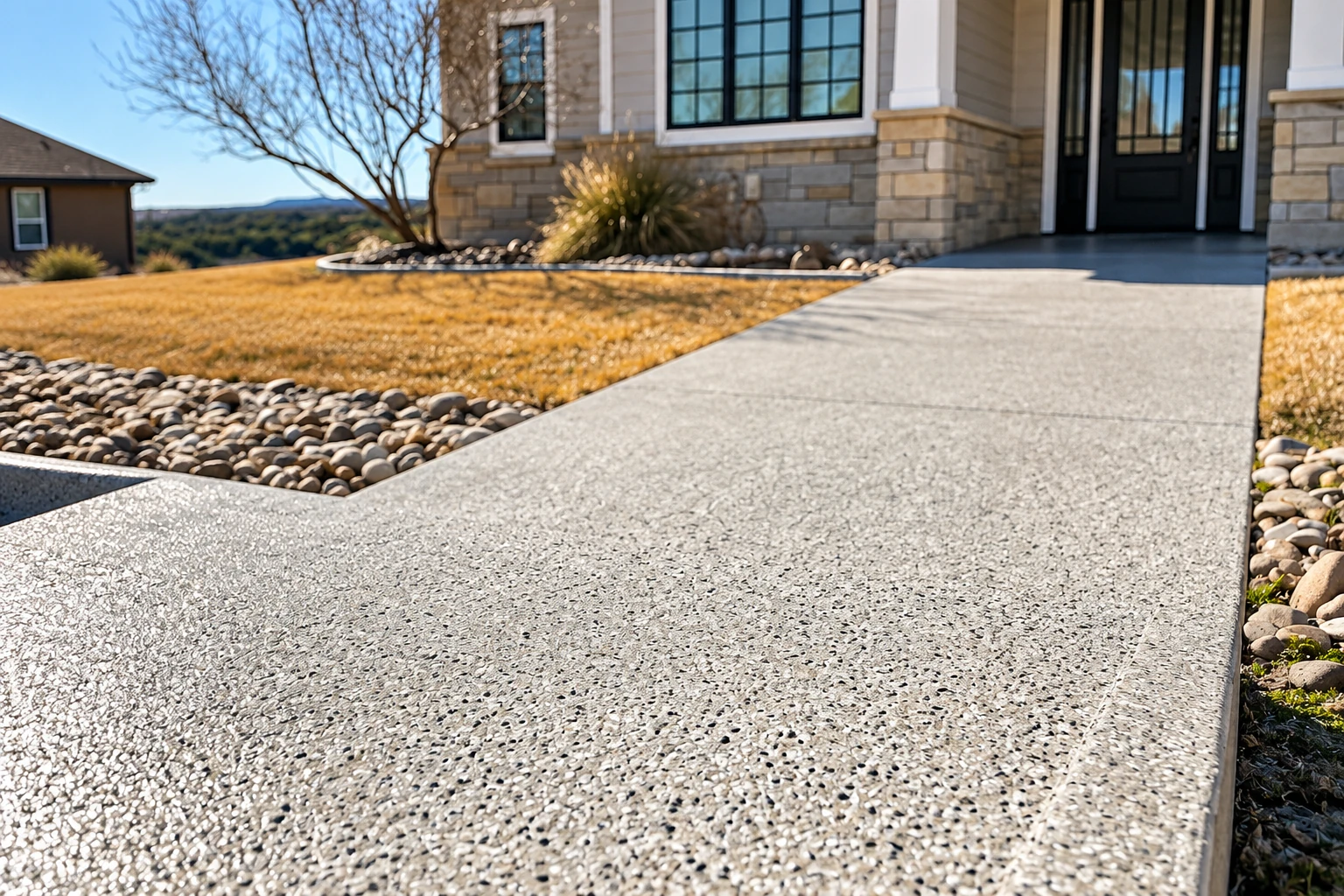
Epoxy Floor Coatings
A good fit for a garage or workroom slab that's dusty, stained or hard to sweep, once we've ground it open so the epoxy bonds into the concrete.
Castro Valley Epoxy Floors and Concrete coats, grinds, polishes and resurfaces concrete floors in San Lorenzo, CA, from garage and basement slabs in homes to shop floors that have to take heavy daily use.
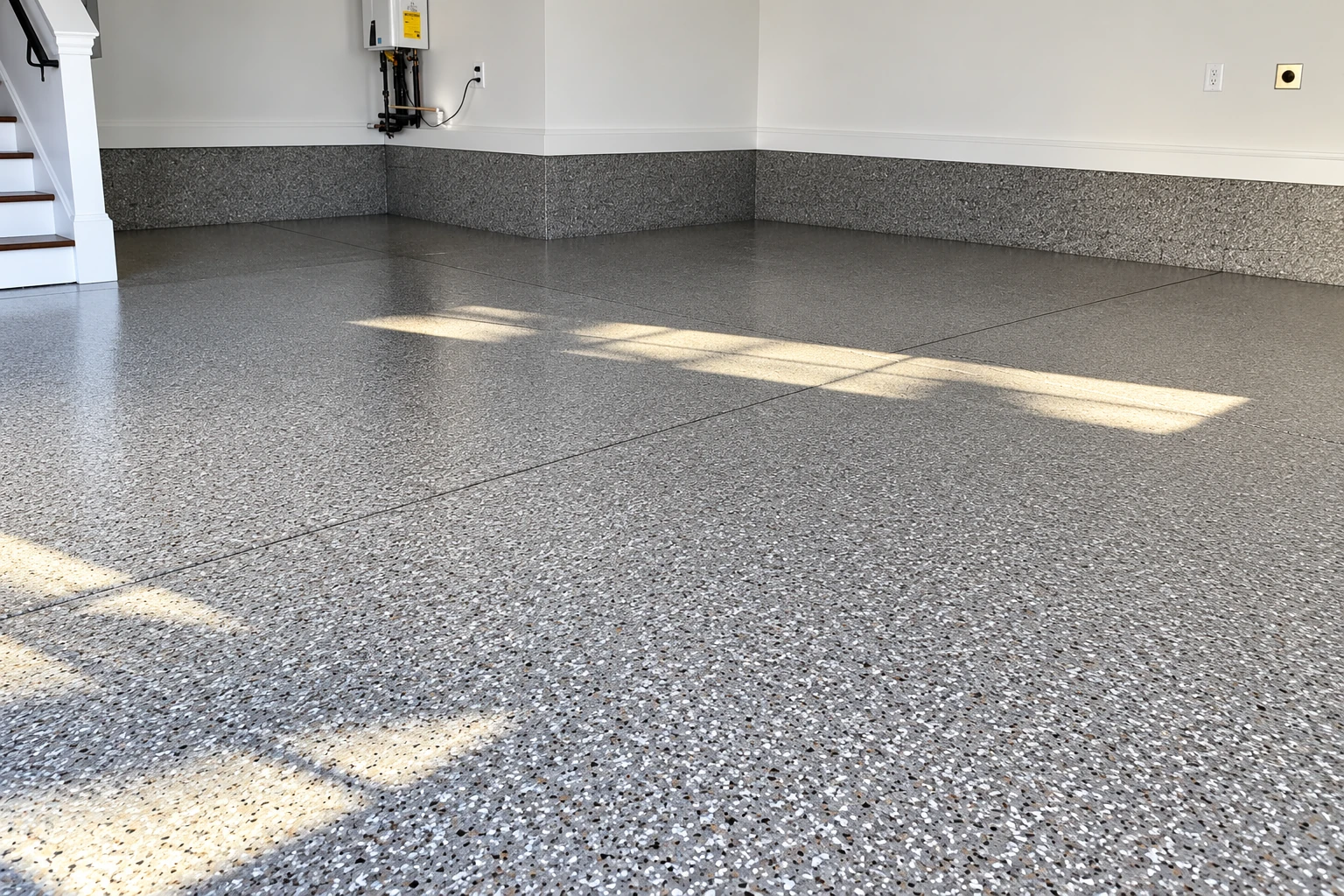
Castro Valley Epoxy Floors and Concrete coats, polishes, seals and resurfaces concrete floors in San Lorenzo, CA. Most calls here are for garage and basement slabs in homes, along with floors in shops and businesses that take hard daily use, and every one starts with grinding and prep matched to the slab in front of us.
We're based close by in Castro Valley, so San Lorenzo is a short drive for our crew, and we work the same way here as we do in Hayward and San Leandro. The garage floors we see are often decades old, with oil stains, patched cracks and a coat of paint or sealer someone put down years ago. Each of those changes what the prep has to remove before anything new will stick.
I got into this trade by grinding and coating my own garage floor, and the lesson I took from it is that prep decides whether a floor holds. So when I look at a slab in San Lorenzo, I check for moisture, soft spots, old coatings and moving cracks before we talk about colors or finishes. If the slab needs more work than you hoped, I'll tell you plainly.
A good fit for a garage or workroom slab that's dusty, stained or hard to sweep, once we've ground it open so the epoxy bonds into the concrete.
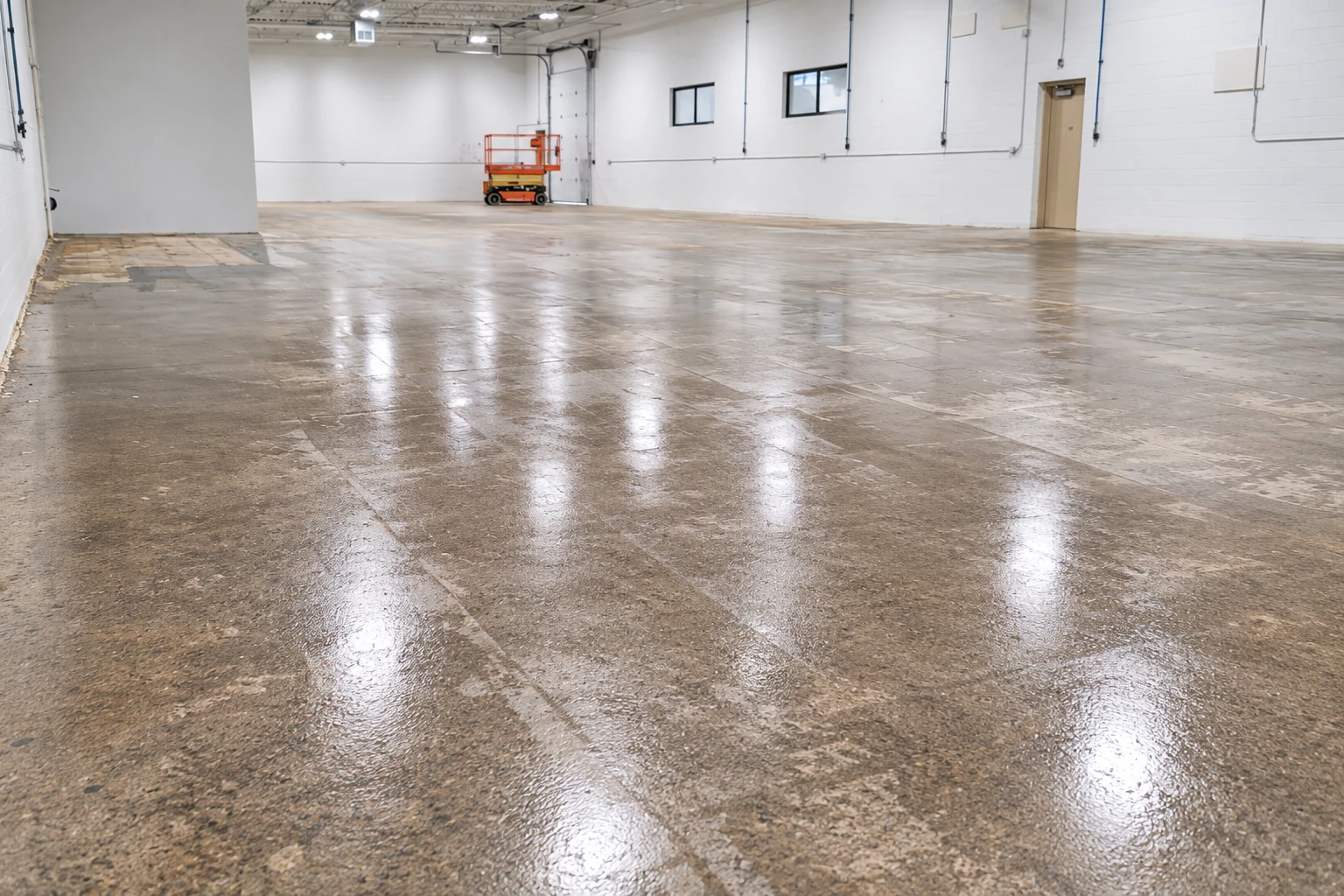
For shops, warehouses and service bays where carts, forklifts and spills wear a floor down, we build a thicker system and plan the work around your business hours.
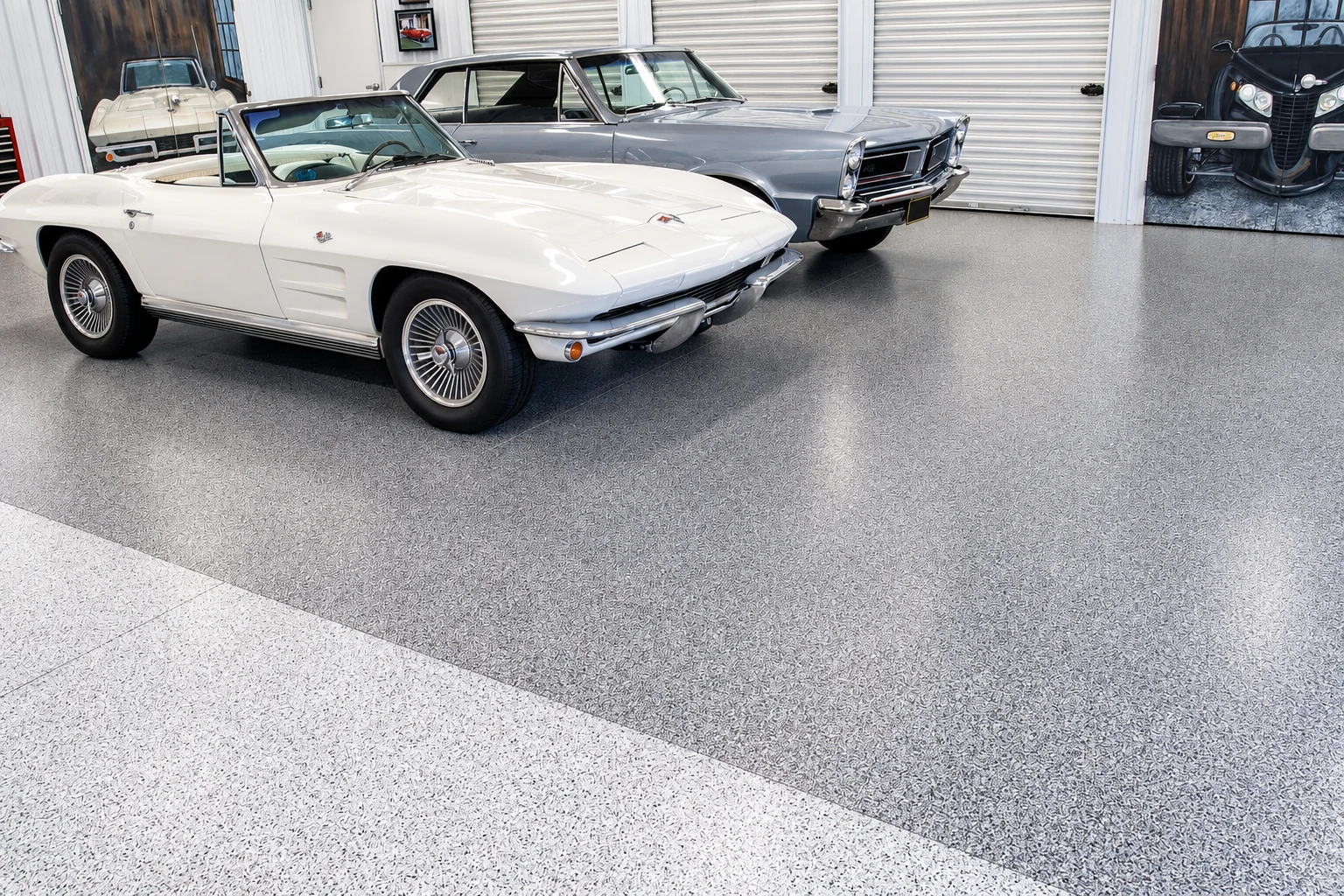
Helps when hot tires lift old paint, oil soaks into bare concrete or the floor never looks clean, with a coating chosen for cars and daily foot traffic.
Worth asking about when you need the garage back sooner, because polyaspartic cures faster than most epoxies, though it gives less working time, so the prep has to be right first.
For a showroom, basement room or finished garage where you want depth and movement in the color, laid over the same careful prep as any other coating.
Suited to kitchens, breweries and food spaces with hot water, cleaning chemicals and temperature swings, where a standard epoxy usually doesn't hold up for long.
Makes sense when the slab itself is sound and you want no coating to peel, since we grind, densify and polish the concrete into a hard, low-maintenance surface.
For patios, living spaces and storefronts where you'd like color in the concrete rather than on top of it, with a sealer to protect the finish.
For lobbies, entries and larger rooms where you want a long-lasting decorative floor of chips set in resin, ground smooth and polished after it cures.
Helps when a basement slab feels damp, dusty or cold, because we test for moisture first and pick a system that suits what's coming up through the concrete.
The step under every floor we do, and also a job on its own when a slab needs opening up, flattening or cleaning back before another trade lays flooring.
Good for driveways, patios and garage floors that soak up oil and water, since the right sealer slows staining and makes everyday cleanup easier.
For a slab that's pitted, flaking or patched but still structurally sound, where a bonded overlay gives you a fresh surface without tearing the concrete out.
Helps when a floor is too uneven for tile, vinyl or a coating, because the self-leveling mix flows out flat before the next layer goes down.
For pool decks that are cracked, hot underfoot or slick when wet, with a resurfacing system that adds texture and repairs the worn concrete underneath.
Needed when an old coating, mastic or glue is failing, since nothing new bonds well over it until we grind or strip it down to clean concrete.
Thank you for reaching out. We reply to every call and form within one business day, and then I come out to your San Lorenzo home or business to look at the slab in person. The estimate is free with no obligation, and I put the price and the prep in writing so you can decide in your own time.
(510) 931-7868San Lorenzo is unincorporated, so building permits here come from Alameda County through its permit portal, not from a city hall. If your floor needs a permit, I'll say so at the estimate and file it with the county for you, or walk you through filing it yourself if you'd rather. Either way, we set our dates around the permit and its inspections, so they become part of your schedule.
Before you hire anyone, please check two things. One is a California contractor license from the state licensing board, and the other is an Alameda County business license, which the county requires for work in its unincorporated areas. We're licensed and insured, and the questions further down explain when each of those licenses applies.
The price turns on the size of the slab, how much old coating has to come off, how many cracks need repair, what a moisture test shows and which system you choose. The schedule turns on that same prep plus the coating's cure time. We do the same prep-first work in Dublin and Ashland, and your written estimate gives you your own figure.
We've been grinding and coating concrete since 2017, and I do every on-site estimate myself. I also stay on the job with our crew from the first pass of prep to the final walk-through, so the person who looked at your slab is the same one checking that the work matches what we put in writing.
I'd rather tell you a slab needs crack repair or a moisture fix than coat it and hope, because a coating over poor prep usually lets go. When the floor calls for it, we start with concrete grinding and surface preparation so the coating has open, clean concrete to bond to.
We treat your house or shop as someone else's property, because it is. We keep the dust down, protect what's near the work and leave the space clean when we go. We're licensed and insured, with satisfaction guaranteed on every job. Please call (510) 931-7868 or send our form to set up a visit.
These are the conditions we plan for under San Lorenzo floors, from the ground the slab sits on to what's been spilled on it over the years.
The flatlands between the hills and the bay sit on layers of sand, gravel, silt and clay, and every lot is a little different. Ground like that can let a slab settle unevenly over the years. We look for low spots, hollow-sounding areas and cracks with a raised edge, and we repair or level them before any coating goes down, because a coating follows whatever is under it.
San Lorenzo Creek crosses the Hayward Fault in downtown Hayward, and that's a major earthquake fault close to these neighborhoods. On a slab, some cracks move a little over time while others are just shrinkage from when the concrete cured. We tell the two apart at the estimate, because a moving crack needs a flexible repair, and a coating laid over one usually cracks along the same line.
Many garages we see carry years of oil, tire marks and an old layer of paint or sealer. A new coating can't bond through any of that, so we test what's on the floor and strip or grind it down to clean concrete first. It adds time and cost, and I'd rather explain why at the estimate than skip it and have the floor peel later.
A slab poured on the ground can carry moisture up through it, and in a basement or garage that moisture pushes against a coating from underneath. It's one of the most common reasons coatings bubble or peel. We test the slab before we choose a system, and when the reading is high we use a primer or system made for it rather than hoping the concrete dries out.
You apply through the Alameda County Permit Portal, which serves the county's unincorporated areas, San Lorenzo among them. The portal is also where you submit plans, schedule inspections and check a permit's status. If your floor needs a permit, we can file it for you or walk you through doing it yourself.
Yes, in most cases. The state licensing board requires a license when the project needs a building permit, uses any additional workers, or the total cost of labor and materials is $1,000 or more across one or more contracts. Please ask any contractor you're considering for their license before you sign anything.
Yes. Alameda County requires a business license for any business activity in its unincorporated areas, even when the business is based elsewhere or already holds another city's license. The county treats it as an annual tax and says the license only shows the tax is paid, so check the state contractor license as well.
The price comes from your slab, so I give it after seeing the floor rather than over the phone. A clean, sound slab costs less to prep than one with old paint, oil, deep cracks or high moisture, and a thicker or decorative system costs more than a single color coat. Your written estimate spells out both.
Please clear everything off the floor, including shelves, bins and anything stored along the walls, and park your cars elsewhere for the job. We'll need access to power and water, and it helps to point out any leaks or spills you know about, because those spots usually need extra grinding.
Most of the time goes to prep and to letting the coating cure, and I'll give you the schedule at the estimate. Stripping old coatings, repairing cracks or treating moisture adds time, and the coating maker's instructions decide when you can walk or park on the floor. If a permit is needed, its inspections set part of the schedule too.
You can reach us at (510) 931-7868 weekdays from 8 AM to 9 PM and weekends from 6 AM to 9 PM, so you can ask about your slab and its permit steps on your own schedule, or send our estimate form any time.